
4 Ways to Get Your Sales Reps in Front of the Real Decision Makers
/
The prospect says, "I'm the decision maker, and I want to move fast."
Your rep hears angels singing. Discovery takes one call. The proposal goes out by Friday. The rep tells you it's closing by the end of the month.
Then the investment lands, and everything stops.
Turns out your rep’s contact has to shop it internally. Suddenly there are people nobody mentioned, with objections nobody has heard. Each new decision maker means a new round of discovery. Best case, the deal slips 60 days. Worst case, it dies.
And your rep? Back on their heels. Instead of driving the pace, they're sent back to the starting line. Reality sets in that this isn't closing anytime soon, and the disappointment grows when they realize they were never talking to the sole decision maker.
I've seen this more times than I can count.
One Question That Would Have Prevented It
"In addition to yourself, who are all the decision makers?"
It's one of my 7 magic questions from my post on how to structure a stellar first meeting in B2B sales. Asking it early lets your rep slow down and account for every stakeholder's needs and objections before the proposal goes out.
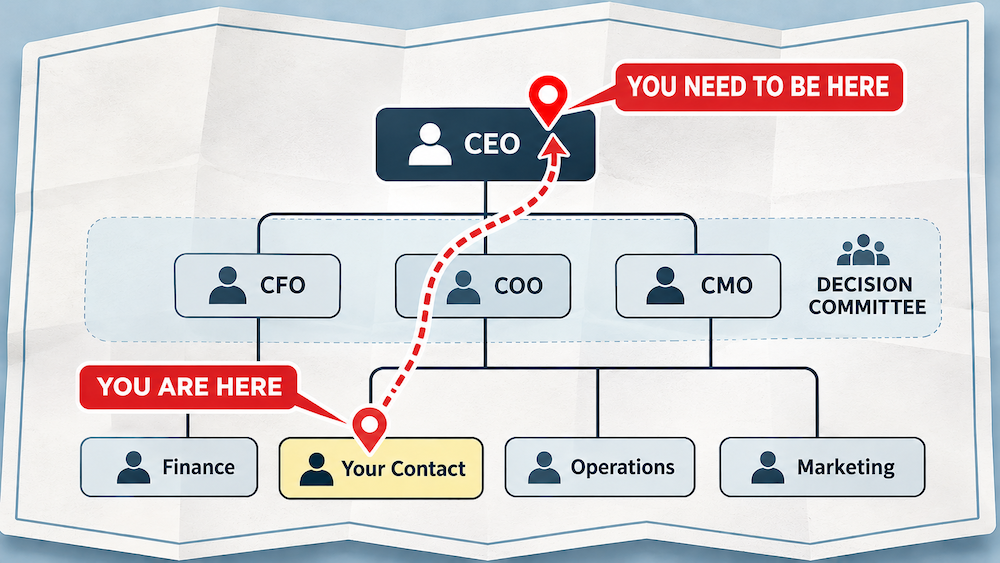
But the trick isn't just asking. It's what happens next. How does your rep get in the room with the whole committee, especially when their main contact is only one voice?
That's what I call access to power. Here are four ways to get it, in the order they come up in a sales cycle. The first one is yours to create for your team.
1. Make It Your Company Policy
The fancy term is modus operandi. The plain one is "it's just how we do it."
When a rep asks for a favor, they sound unsure. When it's policy, they sound confident, and buyers relax. Nobody feels pushed.
Here's the script for the first call:
"Here's how we approach this. Before we put together a plan, we talk to everyone this decision will affect, in addition you. We've seen what happens when we don't: estimates miss, scope changes halfway through, things get messy. Who all needs to be part of this conversation?"
CEO takeaway: Policy takes the pressure off your reps in any uncomfortable moment, not just this one. Write down the rules, and your team stops negotiating alone. Three ideas to start with:
The stakeholder rule. No proposal goes out until we've spoken with the executive sponsor and the key stakeholders.
The price floor. No rep goes below a set price because the deal won't be approved. When a prospect feels a real floor, they stop pushing. Without one, a rep just might keep discounting forever.
The trial rule. We only offer a free trial if the success criteria are agreed up front and we get a full debrief with the decision makers at the end. Otherwise a trial is just another way to kick the can down the road.
Now your reps aren't asking for favors. They're following the process.
2. Pursue Every "I Don't Know"
When your rep can create a knowledge gap they can then start multithreading. Which means getting into more than one conversation inside the account.
The plain version: ask questions your contact can't fully answer.
"What's the dollar amount of risk you're comfortable with?"
"What does your CFO need to see to feel good about this investment?"
Budget, timeline, rollout and approval questions
When they say "I don't know," don't move on. That's a win. The next move is:
"We need that answer. Let's figure out how we get it. Can I reach out to them directly, pull them into our next call, or will you make a quick intro?"
If you have case studies or peer benchmarks, offer to check their numbers against them. That gives the right person value and a reason to take the meeting. Your reps need to start this habit in discovery and jump on every "I don't know" right away.
3. Trade, Don't Give
Otherwise known as quid pro quo. Or more simply: bargaining.
If you bring your whole team to the first call, you have nothing left to offer. Save your best people, such as an expert or a senior executive, for the second or third call, and use them as currency.
Other things reps can trade: a free assessment, benchmarking data, an ROI model for internal use.
Then ask for something in return:
"If I bring our [expert] to the next call, let's make sure your CTO is there too, so everyone gets value from the time."
The same rule applies when the buyer is the one asking. Never accept something without asking for something. If a buyer sends a 155-question information document, say:
"I can turn this around in 10 days. In exchange can I meet with [contact]?
Used wisely, one trade gets you one layer deeper.
4. Ask for the Introduction
This is an old-school referral intro, and it works best after trust is built, usually from the second call on.
"I'd love a quick intro to [name]. Just 30 minutes to understand their perspective on [topic]. Would you make that intro, or can I reach out and mention you connected us?"
One note: your contact may be protective. They're often building their own case internally, and they'd rather stay on the call than hand you off. Respect that. Offer to get the other person on your next call so you can answer their questions directly.
Where to Start Monday
Reps don't get access to power by pushing. They get it through a clear process, good questions, fair trades and trust. The process part is up to you.
If your reps keep getting stalled at the finish line, start with one policy. It makes every other tactic easier.
Want your reps getting in front of the real decision makers? Pitch Lab's sales team training teaches strategic discovery and value selling, built around what we find when we diagnose your team first.